
Regain Your Confidence
If you’re thinking about getting dentures, you might be asking yourself some questions: “How will they fit? Will they look natural? Will anyone know I’m wearing fake teeth?” You might be concerned about practical matters such as the cost of dentures and whether affordable dentures are within your reach.
Although no one welcomes a partial or full set of replacement teeth, they help you chew, eat and speak normally and without pain. They also keep any existing teeth you have from drifting out of position, which prevents a range of dental problems. Most important, affordable dentures restore your smile and give you the confidence to show off your pearly whites without feeling self-conscious about missing teeth. With proper denture care, your replacement teeth will last for years.Denture Basics
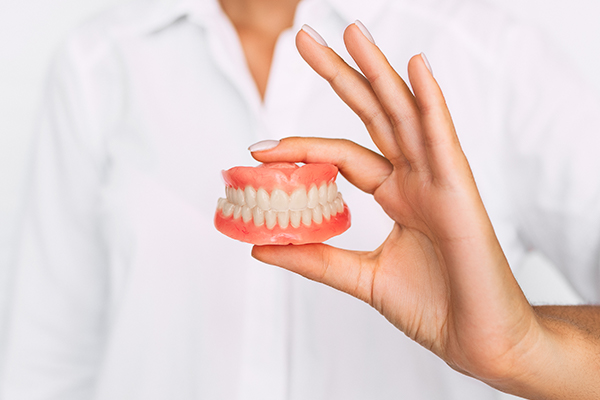
Complete dentures are used when all the teeth are missing; partials are used when one or more natural teeth remain. The cost of dentures will in part be determined by which type you choose:
Complete Dentures — These are either “conventional” or “immediate.” Conventional dentures are made after any remaining teeth have been removed and the gum tissue has healed (usually two to three months).
Immediate dentures are ready for wear the same day any remaining teeth are removed so you don’t have to spend the healing period toothless. The drawback is that you’ll need more adjustments, since your gums and bones shrink during this period.
Partial Dentures — There are two types of partials, removable and fixed. A removable partial (or dental bridge) consists of replacement teeth attached to a gum-colored plastic base. Removable partials are connected by a metal framework that helps keep them in place.
Fixed partial dentures replace one or more missing teeth by placing a dental crown on each tooth surrounding the space and attaching replacement teeth to the crowns. This bridge is then cemented into place.Common Concerns
Talk to your dentist so you’ll know what to expect should you decide to seek out affordable dentures. Here are a few basic questions:
What will they feel like? Dentures may feel odd or even uncomfortable for the first few weeks. You may experience some minor irritation and soreness. These things usually get better as your mouth adjusts.
Will they affect the way I talk? Some words may be difficult to pronounce, so practice saying those words out loud for a while. If your teeth click when you speak, contact your dentist.
Will people know I’m wearing fake teeth? Dentures are designed to resemble your natural teeth. You will be able to speak, chew and look just like someone with natural teeth.
Are replacement teeth expensive? The cost of dentures depends on what you need. A complete set may cost more than partials; dental implants cost more than a dental bridge. If you need a tooth extraction, that factors in to the cost of dentures, too. Affordable dentures provide value for your money; consider the cost of dentures an investment in your future. If you have dental insurance, find out if it covers the cost of obtaining affordable dentures.
What’s involved in denture care? Your dentist will offer tips on denture care. The better you follow your denture care instructions, the longer your replacement teeth will last. Professional denture care in the form of a denture reline may be needed every few years to adjust the fit. If your teeth become too loose over time — which can happen as your mouth’s structure naturally changes — your dentist may suggest a new set.
If you want to learn more about affordable dentures and proper denture care, talk to your dentist.