
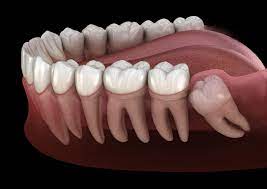
Having wisdom teeth removed has become almost a right of passage for young adults. That’s because by the time wisdom teeth make their appearance — some time between the ages of 17 and 25 — there usually isn’t enough room left in the mouth for them to fit comfortably. Although many people eventually opt for wisdom teeth removal, some take a “wait and see” approach. Sometimes this means avoiding a wisdom tooth extraction procedure altogether — at least until painful wisdom teeth symptoms develop.
So what are wisdom teeth exactly? Wisdom teeth are the upper and lower third molars — the teeth in the very back of your mouth. They’re the last teeth to erupt and got their name because it is believed that by the time these teeth emerge, you have gained some “wisdom.” It is also believed that wisdom teeth once served a purpose they don’t today – like helping Stone Age people chew raw animal flesh and bones. This theory may or may not be true. Rather than debate it, let’s focus on some common dental problems that wisdom teeth can cause.
Impacted Wisdom Teeth Symptoms
Wisdom teeth that are healthy and fit into your mouth well are a valuable asset. Unfortunately, this usually isn’t the case. When the jaw isn’t large enough to accommodate wisdom teeth, they can become impacted. Impacted teeth may grow sideways, emerge only part way from the gum or remain trapped entirely beneath the gum and jaw bone. Each of these possibilities can cause problems, including:
Pressure Pain: Impacted wisdom teeth often have to squeeze in next to teeth that have already settled into place, causing pain and discomfort.
Gum Infection: Bacteria trapped around a wisdom tooth underneath the gum can cause infection. The result is pain, swelling, jaw stiffness and general illness.
Tooth Decay: Partially erupted wisdom teeth can be hard to reach, making proper brushing and flossing more difficult. Bacteria and food particles can gather causing tooth decay and the need for gum disease treatment.
Cysts: A fluid filled sac (cyst) can develop around the gum of an impacted wisdom tooth. On rare occasions, a tumor can develop inside the cyst that can fracture the jaw.
Obviously, these are wisdom teeth symptoms that no one wants to — or should — live with. They raise the often-asked question: is wisdom teeth removal necessary? Next, we’ll take a closer look at wisdom teeth extraction. You might be surprised to learn that wisdom teeth pain doesn’t always mean what you think it does!
Wisdom Teeth Removal: To Pull or Not to Pull?
If your wisdom teeth have already erupted, hopefully they’re not causing you any pain. In the event that your wisdom teeth pain is unbearable or lasts for days or even weeks, be sure to see your dentist. Although pain is a good indicator that wisdom teeth removal is the next step, it’s not always the case. For example, if your wisdom teeth have yet to erupt and there appears to be enough room for them to grow in straight, without crowding other teeth, a wisdom teeth extraction may not be be necessary. Two things are likely to happen: Your dentist may take a “wait and see” approach or recommend removing the wisdom teeth preemptively. The reason for an early extraction is because as wisdom teeth grow, their roots also get longer. That makes them harder to remove and complications more likely. Discuss the risks and benefits with your dentist about removing your wisdom teeth versus waiting; everyone’s situation is unique.
Experiencing a Wisdom Teeth Extraction
Most wisdom teeth extractions are performed by an oral surgeon under local anesthesia, the same injection you would receive to numb a tooth before having a tooth filling. If the surgical procedure will be more involved — as it is when removing impacted wisdom teeth — your dentist may recommend additional methods of sedation dentistry such as nitrous oxide or oral sedation.
As with any oral surgery, wisdom tooth removal does have risks. Two of the most common complications are dry socket and paresthesia. Dry socket occurs if a blood clot doesn’t form over the wound or the clot that did form has become dislodged. Dry socket is extremely painful and requires medical attention. Paresthesia is numbness of the tongue, lip or chin, which can occur if nerves are damaged during dental surgery. This numbness can last for a few days, weeks or months. In some cases, the nerve damage is permanent.
Whether or not your wisdom teeth have emerged, talk to a dentist to see if removal might be right for you.