
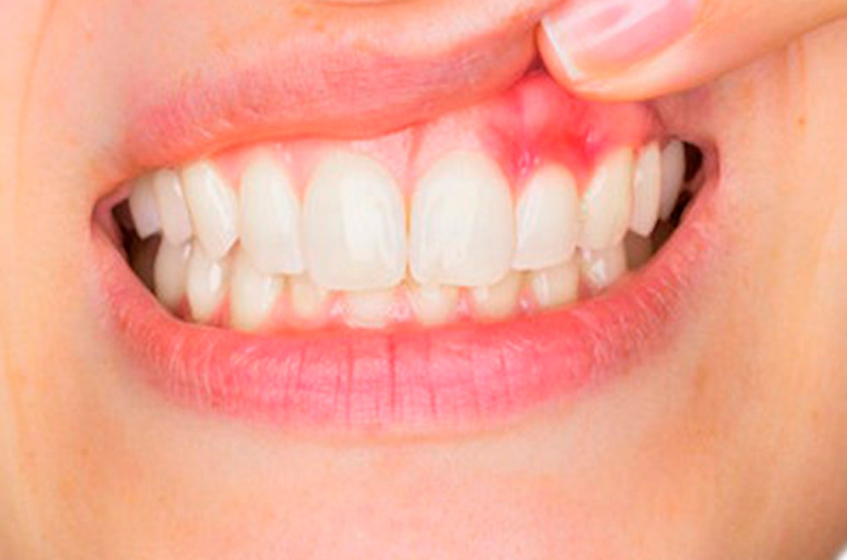
Some things are best when they are bright red — tomatoes, apples, cherries or evening gowns, but definitely not gums. Healthy gums should be pink. Red gums raise a red flag. Red, puffy or bleeding gums could be a symptom of gum disease, also called periodontal disease.
Gum disease is an infection of the tissues that support your teeth, or what we commonly call gums (periodontal literally means “around the tooth”). Ignoring this disease and leaving this infection untreated may cause the gums to break down, resulting in the need for gum disease treatment. When you lose the gums supporting your teeth, your teeth fall out. It’s as simple (and as dreadful) as that.
Causes of Gum Disease
Gums stay healthy only when the teeth they surround are clean — free of dental plaque and dental tartar, a crust formed through dental plaque that hardens over time.
Dental plaque contains bacteria that produce toxins which irritate and damage the gums. When dental plaque and dental tartar build up around the teeth, gums become inflamed.
Now, when bacterial dental plaque feels completely ignored, they continue to destroy the gum tissues around the plaque-and-tartar-surrounded teeth, forming pockets.
As you ignore them, they will keep on working towards deeper gum tissues and the areas of the jawbone supporting the teeth. At this time, your teeth may have either fallen out already, or are just about ready to go, at which point your gums and teeth will be absolutely impossible to ignore.
Symptoms of Gum Disease
When gum disease attacks, it doesn’t hit full-force right away. It starts slowly, almost gently, beginning with some redness of the gums, tenderness and puffiness, probably a little bleeding and bad breath so relentless that even the strongest mouthwash can’t wash it away longer than a couple of minutes. This stealthy stage is known as gingivitis, the milder — but just as dangerous — form of gum disease.
As the disease progresses, it develops into a more severe form called periodontitis. Then, it attacks without mercy. Pockets appear around the base of the tooth. Gums pull away, causing the tooth to become loose until no more gum support is left and the tooth eventually falls out. This happens when gingivitis is ignored, because gum disease usually screams for attention.
Though gum disease often exhibits some symptoms, it may be possible to have the disease active in your mouth without any warning signs. This is why regular dental visits are very important. You don’t want to be ignoring bacteria attacking your gums that you were never aware of in the first place.
Factors Increasing the Risk of Gum Disease
Though dental plaque is the main culprit of gum disease, some factors can increase the likelihood of this unfortunate effect of plaque forming in your mouth.
Smoking or Chewing Tobacco — Well, we’ve all known that smoking is no good. What’s new?
Diabetes and Other Systemic Diseases — Because diabetics are generally more prone to infection due to their body’s inability to heal itself quickly, they are also at a higher risk for developing periodontal disease. Same with those with diseases that interfere with the body’s immune system such as HIV, as they may worsen the condition of the gums.
Genetics — Some people are just unfortunate to belong to 30% of the population who may have inherited a genetic makeup that makes them six times more likely to develop gum disease. You can find out if you’re one of the unlucky ones through a genetic test and turn your luck around. Prevention is indeed the best cure.
Some Medications or Drugs — Oral health can be affected by certain drugs such as contraceptives, anti-depressants and heart medicines, so it is always best to let your dentist know about the drugs you are taking before proceeding with any dental treatment.
Pregnancy — As if having mood swings is not bad enough during pregnancy, hormonal changes may also affect the gums, which makes pregnant women more susceptible to gum disease. With recent studies showing that pregnant women with gum disease are seven times more likely to deliver premature, low-birth weight babies, it is best to take care of pregnant women’s gums.
Stress –Gum disease falls in the list of diseases caused by stress, along with a million other disorders. This is because, according to research, stress makes it more difficult for the body to fight off infection.
Poor Nutrition — Without proper nutrition, the body’s immune system becomes compromised, making it harder for the body to fight infection, including those happening in the gums. It’s self-explanatory.
Clenching or Grinding Teeth — Aside from the awful sound it makes, bruxism also puts excess force on the gums that support your teeth which may speed up the rate of gum destruction caused by gum disease.
Preventing Gum Disease
You keep ignoring your gums until your teeth are ready to fall out and then you start panicking. It’s really simple to prevent gum disease. Proper oral hygiene is a good start — brush regularly, floss every day and don’t procrastinate with your bi-annual dental checkups. With regular dental visits and a healthy diet, you can keep red fruits and that great-looking dress.