
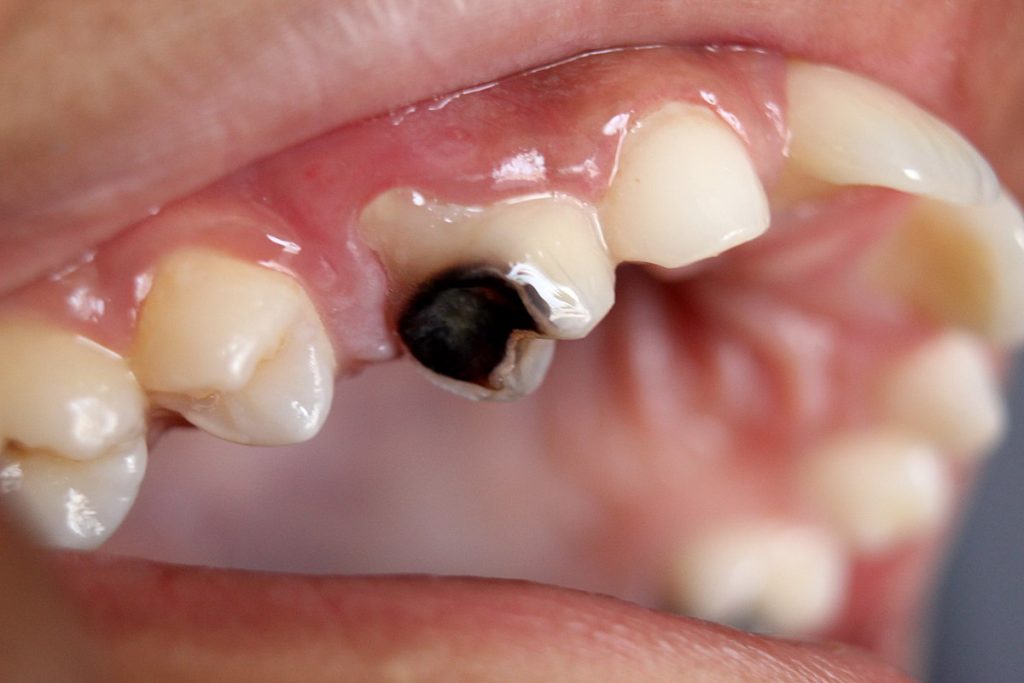
The South Beach Diet™ and Enter the Zone warn that “bad” carbs affect your waistline. That might be debatable, but one thing’s for sure: “Bad” carbs are bad for your teeth. So bad, in fact, that they cause cavities.
Dental cavities, also known as tooth decay and dental caries, are a disease of the teeth that results in the destruction of tooth enamel. A tooth cavity develops when foods containing “bad” carbohydrates such as soda, cake and candy are left on your teeth.
The impact of cavity symptoms is a lot more serious than most people realize. In fact, dental problems related to dental cavities result in more school absences than any other childhood disease. So it’s easy to understand why you might want to learn more about common cavity symptoms and how dentists treat a tooth cavity.
Common Tooth Cavity Symptoms
If you ignore a dental cavity long enough, the cavity symptoms will eventually be hard to miss. For example, years of drinking three cold sodas a day might eventually cause a toothache. That toothache is actually a common symptom of a dental cavity. Another telltale sign of a tooth cavity is bad breath.
If you’re experiencing one or more cavity symptoms, take a peek inside your mouth. An easy way to spot a dental cavity is to simply look at your teeth — if you see holes or pits, they are probably dental cavities. Some dental cavities, however, can only be detected by using X-rays or other sophisticated dental equipment.
Treating Dental Cavities
The only way to treat a dental cavity is to visit the dentist. Dentists usually repair a tooth cavity by removing the decayed part of the tooth and replacing it with a tooth filling. Several materials are available to repair a tooth cavity, including:
Amalgam — Durable, easy to use, highly resistant to wear and economical. Amalgam is typically silver or black in color and contains mercury.
Composite — A tooth-colored mixture of glass.
Glass Ionomers — A translucent, tooth-colored mixture of acrylic acids and fine glass powders.
Porcelain — A ceramic material that mimics a tooth’s natural color. Porcelain is very durable and virtually invisible to the naked eye.
If you think you might have a dental cavity, talk to your dentist to find out which type of filling might be right for you.
Preventing Dental Cavities
One of the simplest ways to protect yourself against a tooth cavity is to eat well-balanced, nutritious meals and to limit snacking. Combining healthy eating habits with these steps can help reduce the risk of cavities even more:
- Brush twice a day with fluoride toothpaste
- Floss daily
- Use supplemental fluoride (if approved by your dentist)
- Ask your dentist about getting dental sealants
Studies show that cavities are particularly common in children and young adults, but dental cavities can affect anyone. To keep cavities at bay, practice good oral hygiene and schedule regular dental visits.
A dental cavity won’t get better on its own. If you’re experiencing one or more cavity symptoms, it’s time to see a dentist.